Grenfell Tower Inquiry: update on recommendations
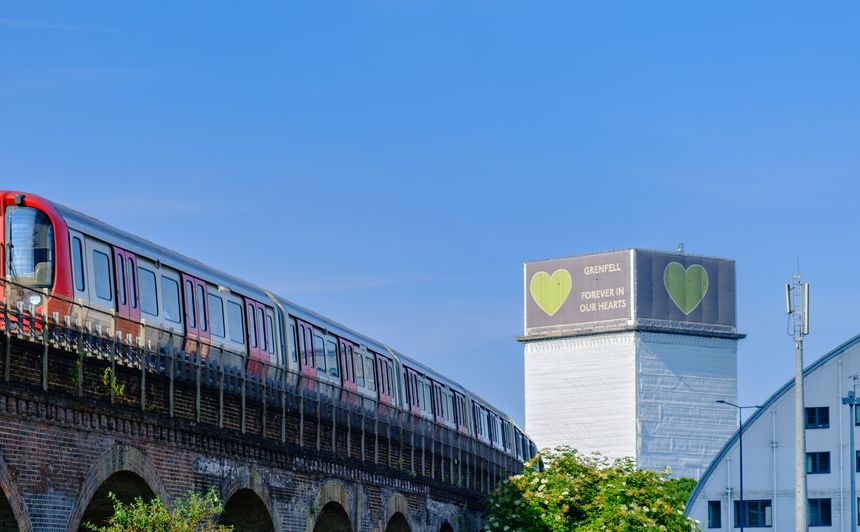
In September 2024, the Grenfell Tower Inquiry published its final report which made 58 recommendations based on its findings and in our original article we looked at some of the key recommendations affecting the construction industry. We now take a look at the Government’s response to two of those recommendations:
- to review the definition of Higher-Risk Buildings; and
- to convene an advisory panel to produce an authoritative statement on the knowledge and skills to be expected of a competent fire engineer.
Review of the definition of Higher-Risk Buildings
The concept of a Higher-Risk Building (“HRB”) was introduced by the Building Safety Act 2022 (“BSA”) which contains onerous obligations governing the design, construction and occupation of HRBs.
In England, the current definition of an HRB is a building which:
- is at least 18 metres in height, or has at least 7 storeys;
- contains at least 2 residential units; and
- does not comprise entirely of a secure residential institution, a hotel, or military barracks, and does not contain military accommodation.
For Part 3 of the BSA (design, construction, and building work to existing higher-risk buildings), hospitals and care homes are HRBs, but, under Part 4 (in-occupation duties), they are not.
As part of the review of this definition, the Government directed the Building Safety Regulator (“the Regulator”) to carry out a review of the key factors in the HRB regime and their implications. Following consideration of the available evidence, the conclusion published in December 2025 was that the original definition “still seems focused on the appropriate categories of buildings”, and that an increase to the scope of the HRB regime at this time would not be right. It was also noted that the definition of HRB, and the associated regime, has only been in operation since April 2024 and so it is still early to say whether it needs to be changed, albeit it is already having a positive impact on buildings within its scope.
Despite this, the Government and the Regulator acknowledged the importance of work to protect vulnerable residents as well as the evolving risks of the built environment and agreed that the Regulator will operate a process for ongoing risk-based review of the definition.
The conclusion is in quite stark contrast to the Inquiry’s finding that defining an HRB by reference to height is unsatisfactory and arbitrary, with the nature of its use and the presence of vulnerable people being more relevant than height. The material tension between the ideal approach, and an approach that is workable in practice, is manifest in this result, and it seems the Government has fallen on the side of practicality so as not to further stifle development in the UK, particularly in the residential sector.
Authoritative statement
In response to this recommendation, the Government appointed a panel comprised of eight of the foremost experts, which produced the authoritative statement in December 2025.
The panel set down the following definition for a fire engineer:
“Fire engineers are professionals who develop and deliver engineering solutions that protect people and mitigate harm to the built and natural environment in the event of fire.”
The statement observed that there is no single recognised pathway to becoming a fire engineer, which leads to variation in the qualifications and skills of those operating as fire engineers. Further, ethical standards are inconsistently defined and monitored, and engineering principles are not always effectively applied, which leads to issues with delivery and poor confidence in the profession.
The statement confirms the panel’s support for the Government’s intention to regulate both the title and function of fire engineers and required legal restrictions on the use of the title of fire engineer. Further, statutory regulation should define the functions and activities that can be performed only by an individual who is registered and has met specific requirements. The preparation of the fire strategy should be a protected function, as that is the fundamental core of a fire engineer’s work. In the absence of an existing authoritative definition of what a fire safety strategy is, the statement sets out the panel’s view on what a fire safety strategy should include, and notes that “In delivering the fire safety strategy, the role of the fire engineer is fundamentally one of integration. The fire engineer acts as the link between multiple disciplines”.
The Government has achieved a robust delivery of this recommendation, with the panel’s statement and the Government’s intentions being aligned, which will hopefully motivate the Government. The stumbling block will be the timeline for the Government to turn intention into reality, and whether the practical reality of the huge demand for fire engineers will lead to the Government diverging from the panel’s statement and its current intention.
Subcribe to news and views