The Future Buildings Standard is here: what do commercial real estate investors/developers need to know?
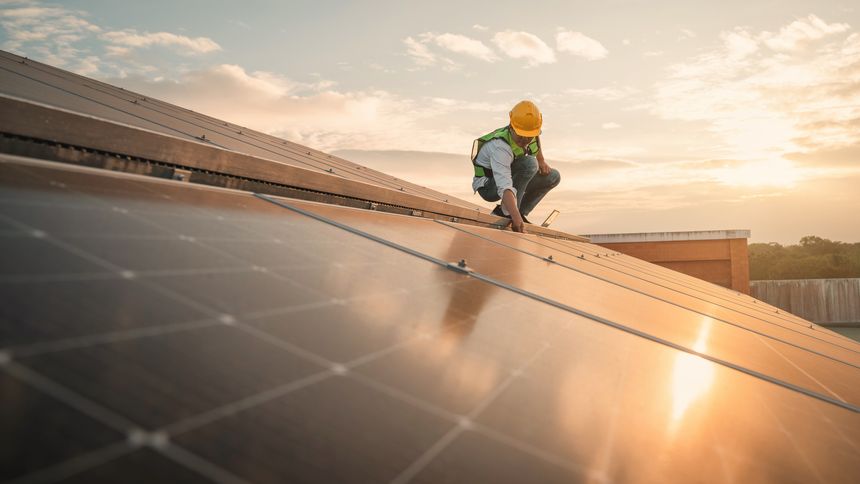
Many of us will have read headlines in the press this week about the launch of the updated Future Homes Standard, which mandates zero carbon technology (e.g. solar panels, heat pumps) on most new domestic homes.
This is an important step and has been well received but this week has also seen, after a long wait and with somewhat less fanfare, the announcement of the Future Buildings Standard (FBS) for non-domestic buildings.
What is it and how did we get here?
As mentioned in the Solar Roadmap the Government has identified the key contribution that rooftop solar on non-domestic buildings can make in the road to net-zero. The Roadmap also envisages that the Building Regs regime will be the most reliable route for scaling up rooftop solar (as with domestic buildings and the ‘Future Homes Standard’).
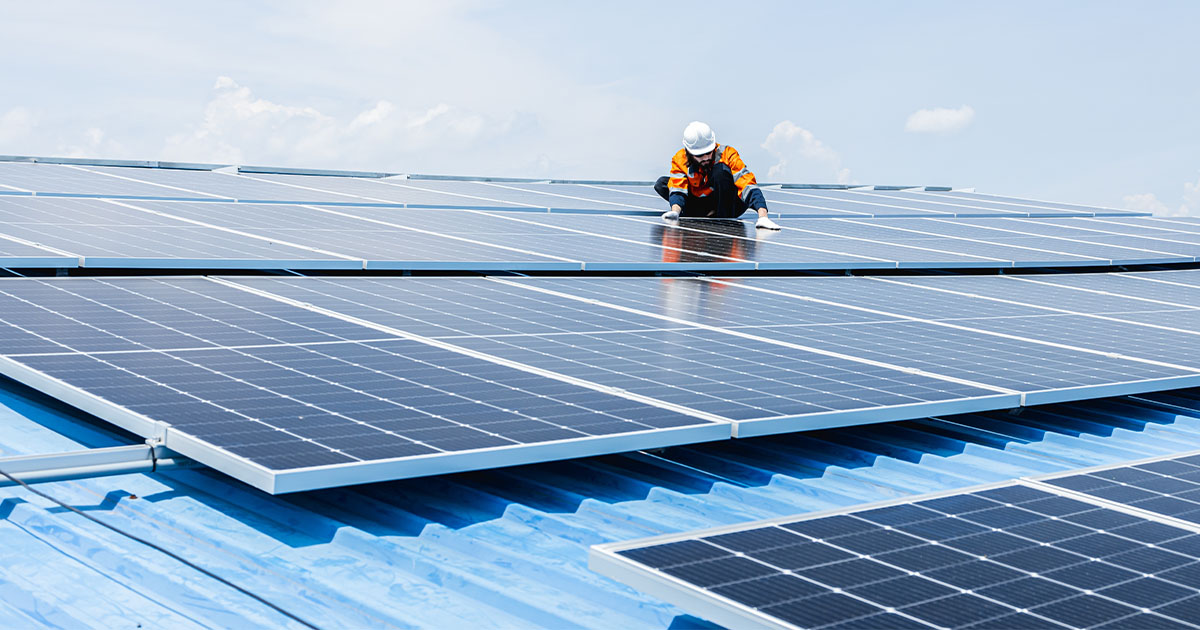
In short, the FBS introduces mandatory solar PV (amongst other energy performance requirements) for new buildings via Part L of the Building Regulations in England.
What does this mean for commercial real estate?
New non-domestic buildings in England will be required to produce significantly lower carbon emissions than under existing regulations, specifically:
Non-domestic buildings (e.g. offices, warehouses, retail buildings) must incorporate solar panels equivalent to 40% of the building’s foundational area.
Other points to note:
- Transitional arrangements apply to existing projects where an initial notice or application for building control approval has been submitted before 24 March 2027 (as long as that work starts before 24 March 2028).
- The updated Regulations will apply to ‘higher-risk buildings’ (using the Building Safety Act definition) from 24 September 2027 (rather than the 24 March 2027) and different transitional provisions apply depending on whether a valid Gateway 2 application has been made before this date. Additionally, HRBs are exempt from the solar PV requirement.
- Buildings containing accommodation which is not ‘self-contained’ (e.g. hotel rooms and student accommodation which do not have their own entrance, kitchen, bedroom, living space) will be assessed in line with the regulations for non-domestic buildings rather than domestic.
- These requirements do not apply to:
- Listed buildings or buildings in a conservation area if compliance would unacceptable alter the building’s character or appearance.
- Buildings used primarily or solely as places of worship,
- Temporary or modular/portable buildings (planned to be used for two years or less).
- Industrial/workshop/agricultural buildings with no or limited energy demand for heating or cooling systems.
- New and existing non-domestic buildings with less than 50 square meters of useful floorspace.
- Carports and covered yards below certain sizes.
Key dates:
- 24 March 2027 – commencement of the FBS for most non-domestic buildings excluding higher risk buildings (HRBs).
- 24 September 2027 – commencement of the FBS for HRBs.
- 24 March 2028 – end of transitional arrangements for non-HRBs.
Final thoughts:
We welcome the Government publishing their response on the Future Buildings Standard and the continued recognition that rooftop solar on non-domestic buildings has a big part to play in reducing our reliance on gas and oil – particularly in light of recent events in the Middle East.
Nevertheless, a variety of challenges remain for landlords and developers looking to implement rooftop solar projects into their portfolios, including Grid connections, tenant engagement, concerns around rooftop structures but also viability/financing concerns. The withdrawal of VAT rebates on Chinese exported PV panels from 1 April 2026 is going to add significant costs to the cost of new PV panels.
The Future Buildings Standard is, therefore, a good start but is just one piece of a rather complicated puzzle. Click here to visit our commercial real estate page.
Subcribe to news and views