Making renewable energy work
Solar energy is changing how owners, developers, investors and occupiers think about real estate. A rooftop can become an income-producing asset as well as helping to support landlords and occupiers decarbonise and meet increasingly important sustainability targets.
Given continued volatility in global energy markets as well as domestic challenges around Grid connectivity, it is increasingly important that new developments are designed around on-site power and that existing buildings are appraised for their suitability for solar.
Our market-leading real estate knowledge sits at the heart of our renewable energy practice. We combine it with expertise across rural estates, construction, planning, finance, corporate, commercial and tax. This joined-up approach helps us manage the legal and commercial issues throughout a project’s lifecycle.
A growing market
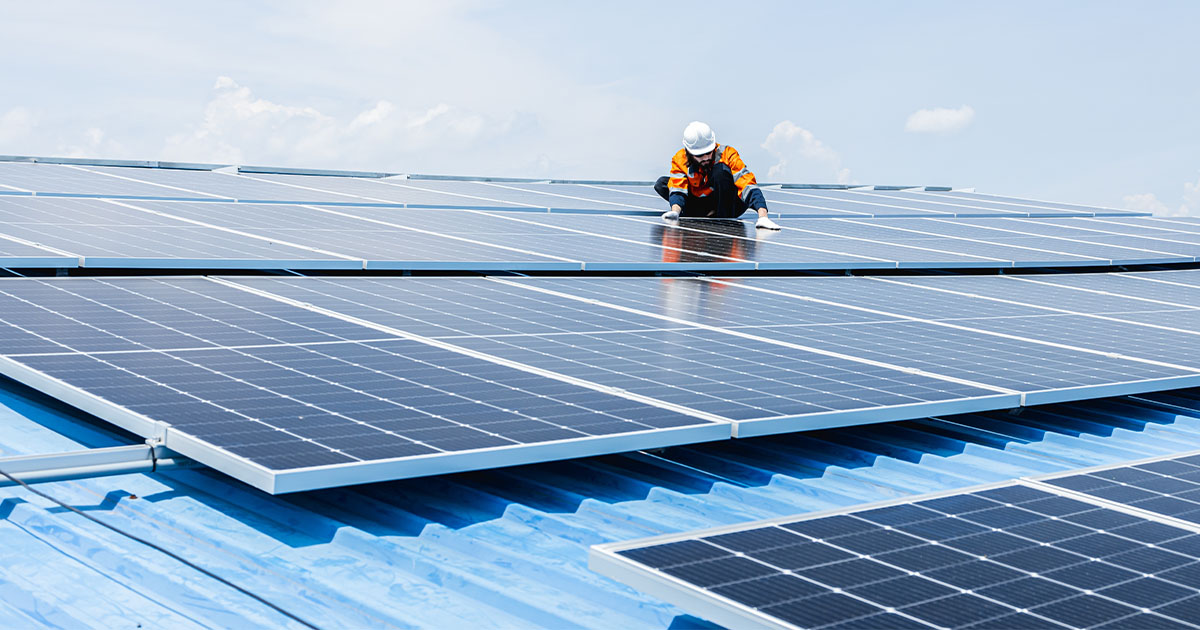
Solar is already a significant part of the UK’s energy infrastructure, but the market still has considerable room to grow, particularly in terms of the deployment of solar arrays on commercial roofspaces. Estimates suggest that only 10% of suitable rooftop space on commercial buildings has been utilised to date and the Government’s Clean Power 2030 pathway envisages utilising that space as part of plans to increase solar capacity to around 45 to 47 GW by 2030.
The published response to the Government’s consultation on Minimum Energy Efficiency Standards (MEES) also creates further impetus behind the switch to solar. Privately rented commercial units over 1,000 square metres in England and Wales will need to reach at least EPC ‘B’ by 2031 (vs the current minimum ‘E’ standard) save where exemptions apply.
This change will push many asset owners to reevaluate the potential deployment of solar across their commercial portfolios in order to stay compliant as well harnessing the other well-established benefits of on-site solar including:
- additional revenue source for landlords selling on-site generated energy to occupiers;
- reduction of occupiers’ energy costs vs Grid pricing;
- increased marketability of sustainable assets to tenants and investors;
- helping landlords and occupiers achieve sustainability targets and reduce Scope 2 emissions;
- compliance with increasingly expectant planning and building control requirements; and
- opportunities for colocation of solar alongside battery storage and electric vehicle charging to further leverage on-site generation.
Making the most of these opportunities calls for a clear understanding of the property, the proposed development and offtake structure and client’s wider commercial and property strategy.
Where do we come in?
Commercial roofs offer significant untapped potential. Warehouses, logistics facilities, offices, retail assets and mixed-use developments can all support solar generation, with large industrial and warehousing assets occupied by power-hungry occupiers representing a clear use case.
Legal structures vary greatly from asset to asset and will impact on the appropriate ownership and funding arrangements for each solar project. We can help clients analyse the legal suitability of assets for solar on an individual and portfolio-wide basis as well as advising on a broad range of transaction types for clients implementing rooftop solar on their properties. This includes:
- advising owners on leases and licences granted to solar developers;
- varying existing occupational leases to enable solar installations (whether funded by the landlord, occupier or a third party solar developer) and to structure power price arrangements accordingly
- reviewing roof rights, access, service media, security and maintenance arrangements;
- providing strategic investment-level advice of the impact of solar projects on the allocation of responsibility for repair, reinstatement and insurance between landlords and occupiers;
- addressing lender consent, security and step-in rights;
- advising on construction documents relating to the installation of solar assets including building contracts, professional appointments and warranties;
- protecting future redevelopment, reletting, asset management and sale strategies.
Solar development is not separate from real estate strategy. It can affect how an asset is occupied, repaired, insured, financed, valued, sold and redeveloped.
That is where our approach makes a difference.
We understand institutional investment requirements, commercial leasing structures, development projects and rural land. We use that knowledge to help clients create solar arrangements that are bankable and workable, while preserving the long-term value and flexibility of the underlying property.
Ground-mounted solar developments
Aside from rooftop solar installations on commercial assets, the UK’s energy mix continues to rely on power generated from ground-mounted solar projects. We have extensive experience guiding UK landowners through all types of renewable energy acquisitions and developments in this area. Discover more about our offering on these complex projects.

Rooftop solar: Unlocking a major opportunity
Despite growing momentum and strong industry interest, rooftop solar remains significantly under deployed across the sector. In 2026, we partnered with RE:UK, Cushman and Wakefield and Push Power to produce original research into the current state of the rooftop solar market and to make policy recommendations as to how to support growth in this area.

One team, connected advice
Our renewable energy work draws on specialists across the firm. By bringing these disciplines together, we give clients a clear route through complex projects and keep the advice focused on the outcome they want to achieve:
Meet our team

Andrew McEwan
Partner, Commercial Real Estate

Victoria Towers
Partner, Head of Commercial Real Estate

Edward Glass
Counsel, Commercial Real Estate

Polly Montoneri
Partner, Rural Land and Business